AWS Builder Center Launches Dedicated Mobile Application to Enhance Developer Productivity and Community Engagement

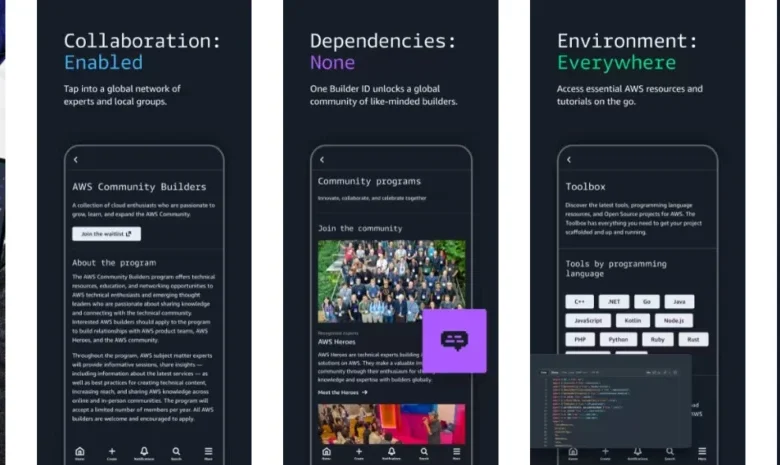
The Amazon Web Services (AWS) ecosystem has officially expanded its reach into the mobile landscape with the launch of the AWS Builder Center mobile application, now available for download on both the Apple App Store and Google Play Store. This strategic move marks a significant shift in how AWS facilitates learning, collaboration, and project development for its global community of builders. By migrating the core functionalities of the web-based Builder Center to a dedicated mobile environment, AWS aims to bridge the gap between desktop-bound development workflows and the increasing demand for on-the-go professional development.
Evolution of the AWS Builder Experience
For years, the AWS Builder Center has served as a centralized digital hub for developers, architects, and IT professionals to refine their cloud computing skills. Historically, the platform was optimized for desktop environments, requiring users to remain tethered to traditional computing setups to access specialized workshops, technical documentation, and community-driven knowledge bases.
The launch of the mobile application follows a broader industry trend toward mobile-first development tools. According to recent data from the Stack Overflow Developer Survey, a substantial percentage of developers now utilize mobile devices not only for communication but for tracking project progress, monitoring CI/CD pipelines, and accessing documentation during downtime—such as commutes or travel. By integrating features like persistent authentication via AWS Builder ID, the new mobile app allows users to seamlessly transition between devices, maintaining continuity in their learning journeys and project management tasks.
Core Features and Functionality
The AWS Builder Center app is designed to be a comprehensive utility for the AWS community. It consolidates several distinct services into a single interface, offering:
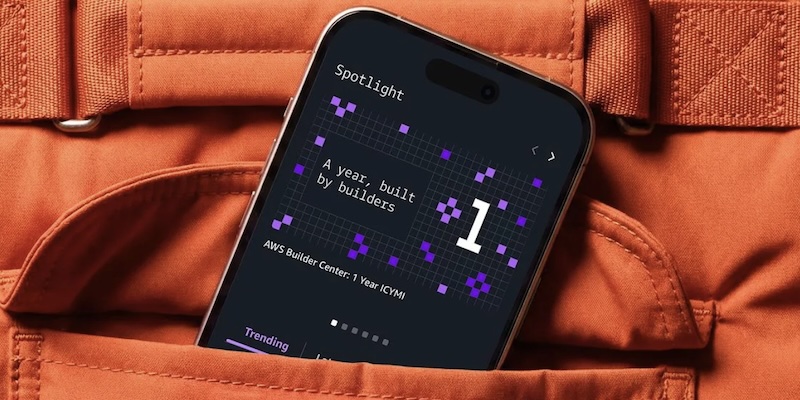
- Learning and Skill Development: Users gain direct access to over 600 AWS Skill Builder courses. This enables developers to engage with professional training modules in a mobile-optimized format, suitable for intermittent study periods.
- Hands-on Sandboxes: One of the most critical aspects of the application is the ability to manage and initiate hands-on workshops. By providing access to free sandbox environments, AWS allows users to test code, experiment with infrastructure configurations, and practice cloud architecture patterns without the risks associated with production environments.
- Community Integration: The app serves as a social layer for the AWS community, allowing users to follow prominent AWS Heroes, Community Builders, and User Group Leaders. This feature provides a direct pipeline for news, updates, and collaborative opportunities.
- Event Management: Users can now monitor Builder Loft event calendars in real-time, receiving push notifications for upcoming sessions or community gatherings, ensuring they remain updated on networking opportunities.
- Feedback Loops: The integrated Wishlist feature provides a structured channel for users to submit direct feedback to AWS product teams. This represents a commitment to a user-centric development model, where community input directly informs the future roadmap of AWS services.
Introduction of Interactive Polling and Engagement Metrics
Alongside the mobile app launch, AWS has introduced a new polling feature to the Builder Center platform. This tool allows community members to pose questions directly within the Home feed, supporting between two and five answer options. The implementation of this feature is designed to facilitate faster gathering of insights on technical challenges, industry trends, and preferred architectural approaches.
From an analytical standpoint, the polling feature emphasizes data privacy and objectivity. By keeping votes anonymous and displaying only aggregate percentages, AWS mitigates the risk of bias or peer pressure, encouraging more authentic community participation. This, combined with the comment-based discussion system, fosters a collaborative environment where technical consensus can be built through crowdsourced intelligence.
The Zero to Shipped Hackathon: Driving Practical Innovation
In conjunction with the platform updates, AWS has initiated the "Zero to Shipped" hackathon, which runs from September 18 through October 2. This event underscores the platform’s emphasis on practical, outcome-oriented development. Participants are tasked with connecting their coding agents to AWS, constructing a functional application, and deploying it live.
The incentive structure for this event is significant, featuring a total prize pool of $28,000. Five winning projects will be awarded $5,000 in AWS credits, providing winners with the resources to scale their applications, along with an official AWS Builder swag bundle. This hackathon is not merely a contest; it serves as a stress test for the new mobile and desktop integrations, demonstrating how rapidly developers can move from ideation to production-ready deployment using modern AI-assisted coding tools.
Industry Implications and Strategic Context
The launch of a dedicated mobile application for the AWS Builder Center suggests a broader strategic intent to increase "platform stickiness." By providing a persistent, mobile-accessible environment, AWS encourages more frequent interaction with its ecosystem. For the average developer, this reduces the friction associated with switching contexts; a problem that arises when one must log into a separate portal or search through fragmented documentation.

Furthermore, the integration of coding agents into the hackathon criteria highlights the increasing reliance on generative AI within the software development lifecycle (SDLC). By incentivizing the use of coding agents, AWS is actively training its user base to leverage modern automation tools, which in turn drives higher consumption of cloud-based compute and storage resources.
Looking Ahead: The Future of Developer Tools
The transition toward mobile-centric development tools marks a maturation in the cloud industry. As developers move away from the "desk-only" paradigm, service providers are forced to optimize their interfaces for smaller screens, lower bandwidth environments, and shorter, more frequent interactions.
Industry analysts observe that as AWS continues to lower the barrier to entry through these mobile initiatives, the community is likely to see an increase in participation from developers in regions where desktop hardware may be less accessible or where mobile-first connectivity is the primary means of internet access. The ability to manage sandbox environments, participate in high-stakes hackathons, and contribute to community polls directly from a smartphone is a clear indicator that the future of cloud development is increasingly decentralized and agile.
As the AWS Builder Center matures, the success of these mobile and interactive features will likely serve as a benchmark for other cloud service providers. With the current roadmap focusing on community feedback and mobile accessibility, the platform is well-positioned to maintain its status as a cornerstone for cloud education and collaborative development. For builders, the message is clear: the ability to build, learn, and contribute is no longer tied to a specific location or device, but is now a continuous, integrated component of the mobile-first professional experience.
Related posts: